
Marketing Strategy
August 13, 2025
Playing the Right Game: Game Theory and the Art of Business Strategy
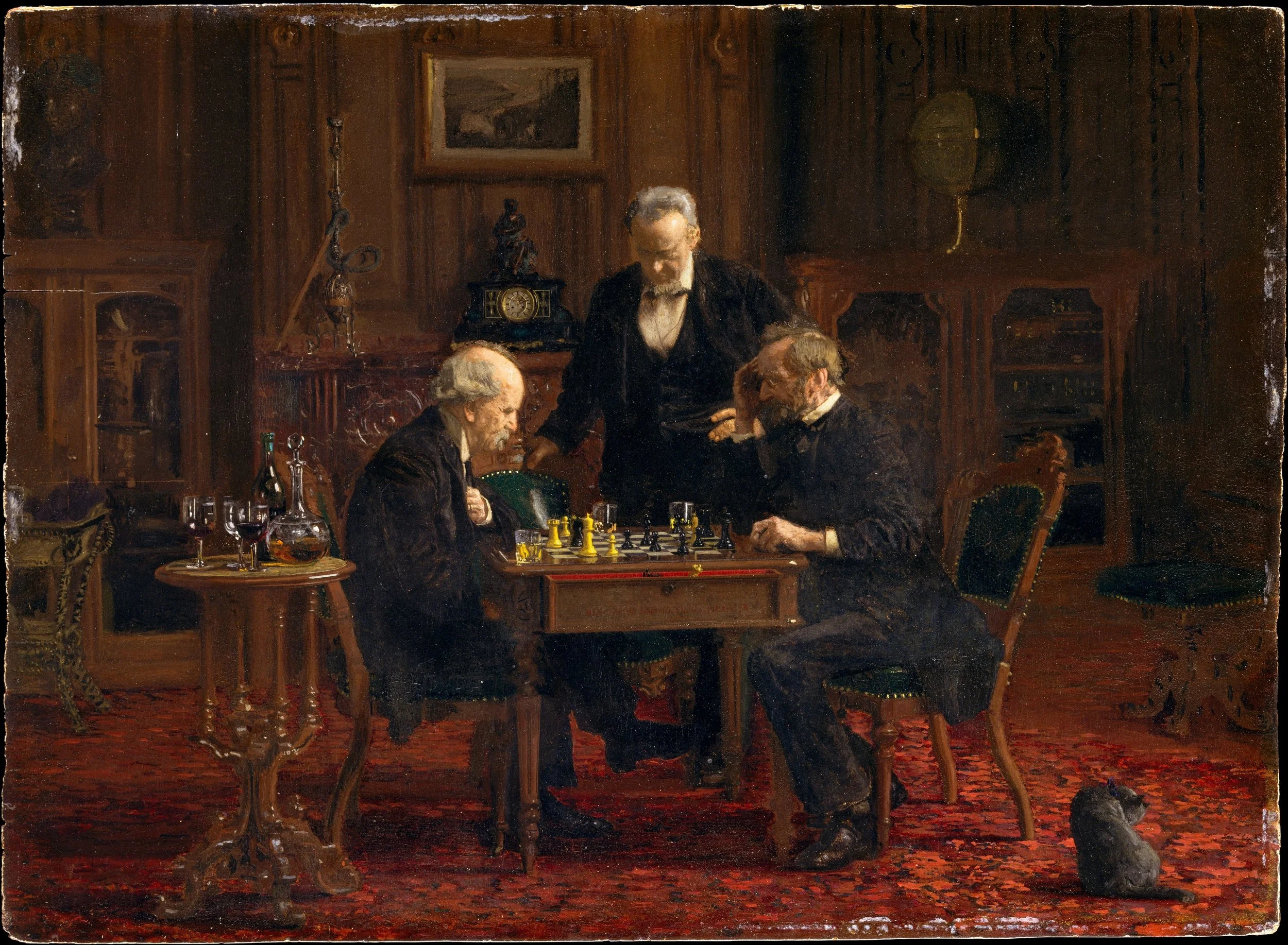
The Chess Mistake
Most business owners think of their competitive landscape like a chess match. There's a board. There are opponents. The goal is to outmaneuver them, capture their pieces, and win.
The chess metaphor isn't entirely wrong, but it's dangerously incomplete. Chess is a finite, zero-sum game with fixed rules, a known set of opponents, and a clear winner at the end. Business — especially small business in a community context — is almost nothing like that.
This is where game theory offers some genuinely useful tools. Not in the abstract mathematical sense most people think of when they hear "game theory" — but in the practical sense of understanding the strategic dynamics that shape how businesses compete, cooperate, and create value.
Finite vs. Infinite Games
Simon Sinek popularized the concept of finite versus infinite games in a business context, drawing on the work of philosopher James Carse. It's worth spending a moment here because it reframes nearly everything about how you should think about strategy.
A finite game has known players, fixed rules, and an agreed-upon endpoint. Football is a finite game. An auction is a finite game. A sales contest with a quarterly leaderboard is a finite game.
An infinite game has known and unknown players, rules that can change, no defined endpoint, and a goal not of winning but of perpetuating the game. Business is an infinite game. The goal isn't to "beat" your competitors — it's to keep your business viable and thriving over the long term.
When a business plays an infinite game with a finite mindset — when it makes decisions purely to "win" this quarter, this year, this news cycle — it consistently makes choices that undermine its long-term viability. Cutting corners on quality to hit a margin target. Discounting aggressively to beat a competitor on price. Burning out your best employees to maximize short-term output.
The small businesses that endure in our communities — the ones that become institutions — are almost always playing the infinite game. They're not trying to win. They're trying to keep showing up, keep serving, keep improving. That orientation changes everything about how they make decisions.
The Prisoner's Dilemma and Why Price Wars Are Traps
If you've ever taken an economics course, you may have encountered the prisoner's dilemma: two players who would both be better off cooperating but whose rational self-interest leads them to choices that make both of them worse off.
Price wars among local competitors are almost textbook prisoner's dilemmas. Here's how it plays out:
Two competing businesses in the same market — let's say two lawn care companies in LaGrange County — are both profitable. One of them decides to undercut the other on price to capture market share. The other has to respond or lose customers. They match the price. Now both are operating at lower margins. The first company cuts prices again. The other follows. Eventually, both companies are working harder for less money, their quality suffers because they can't afford to invest, and the customers who were supposed to benefit are getting mediocre service.
Neither company "won." Both made individually rational short-term choices that led to a collectively worse outcome. This is the essence of the prisoner's dilemma.
The escape from this trap isn't clever pricing strategy. It's differentiation. When your business offers something genuinely different — not just cheaper or marginally better, but meaningfully distinct — you stop playing the same game as your competitor and start playing a different one entirely.
Nash Equilibrium and Finding Your Stable Position
John Nash — of "A Beautiful Mind" fame — gave us the concept of equilibrium: the point in a competitive game where no player can improve their outcome by changing their strategy, given what everyone else is doing.
For small businesses, this concept has a practical application: what market position can you occupy where you're genuinely strong, where competition is less direct, and where you can be stable and profitable over the long term?
Many small businesses get stuck chasing the same customer segment, with the same offer, using the same marketing channels as their competitors. The result is a crowded, margin-compressing fight for the same slice of the pie. Finding your equilibrium position means identifying the specific customer, the specific need, the specific experience that you can serve better than anyone else — and then building everything around that.
This is what we call positioning, and it's one of the most foundational strategic exercises a small business can do.
Cooperative Strategies: When Competition Becomes Collaboration
Here's the part of game theory that surprises most business owners: sometimes the optimal strategy involves cooperation with competitors.
This concept — sometimes called "co-opetition" — is particularly relevant in small business communities. Two independent restaurants that refer customers to each other when they're full are both better off. A group of complementary service businesses that cross-refer clients builds a network that benefits every member. Local businesses that band together for community events, shared marketing initiatives, or collective advocacy create goodwill that no individual member could generate alone.
In Northeast Indiana, where community identity is strong and "buy local" sentiment is genuine, cooperative strategies can be powerful. The question is always: where does competition serve us, and where does cooperation create more value for everyone involved?
The Strategic Takeaway
Game theory doesn't give you a formula for business success. What it gives you is a richer vocabulary for thinking about your competitive environment and a set of mental models that can prevent some of the most common strategic mistakes.
- Play the infinite game. Focus on sustainable viability, not quarterly wins.
- Escape zero-sum thinking through differentiation. When you compete purely on price or volume, you're in the prisoner's dilemma. Get out.
- Find your stable position. Know the specific game you can win — and focus there.
- Look for cooperative opportunities. Not every competitor is an opponent in every context.
The businesses that navigate competitive environments most successfully are the ones who think clearly about the nature of the game before they choose their moves. That kind of strategic thinking is available to any small business, regardless of size. It just requires stepping back from the daily grind long enough to see the board clearly.
Tags