
Marketing Strategy
August 20, 2025
Beyond Customer Focus: The Eternal Power of Customer Centricity
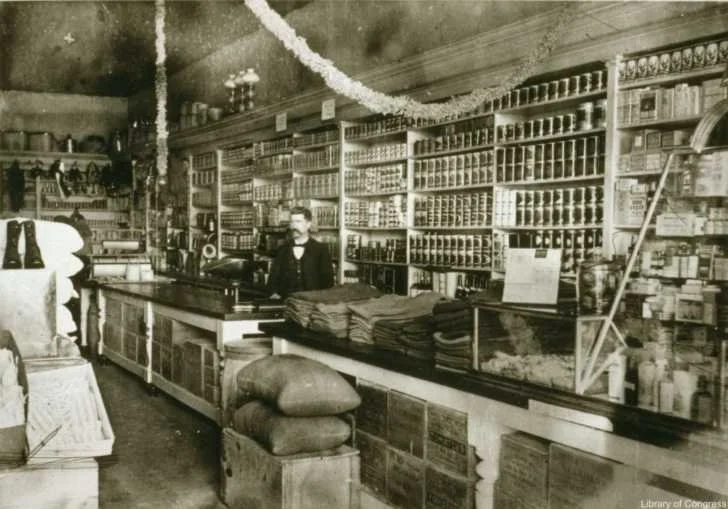
Two Businesses. Same Town. Very Different Results.
Imagine two hardware stores in a small Indiana town. Both are locally owned. Both have friendly staff. Both carry roughly the same inventory. Both owners would tell you, sincerely, that they care about their customers.
One of them, when a customer walks in, greets them warmly and directs them to the right aisle. If they don't have something in stock, they apologize and suggest trying the big-box store thirty miles away. They measure success by daily sales and monthly revenue.
The other does something different. They track what their customers ask for and don't have — and use that data to adjust inventory. When a contractor needs something special, they'll special-order it and have it ready by next week. They keep a mental (and sometimes literal) file on their best customers: what they're building, what they prefer, what they'll need next. When a longtime customer retires and his son takes over the farm, they reach out to introduce themselves and learn what the son needs. They measure success by customer lifetime value and retention rate, not just daily sales.
Both owners are customer-focused. Only one is customer-centric. And after a decade, their businesses look very, very different.
The Distinction That Changes Everything
Customer focus is an attitude. Customer centricity is an operating system.
A customer-focused business cares about its customers and tries to serve them well. It responds to complaints, trains staff to be polite, and genuinely wants to provide a good experience. These are good things. But customer focus is still fundamentally inside-out: the business decides what it offers and how it operates, and then tries to do those things in a customer-friendly way.
Customer centricity is outside-in. It starts with the customer — their needs, their journey, their definition of value — and organizes the business around those things. Strategy, operations, communication, product development, pricing: all of it is filtered through the question "what does this mean for the customer?"
The concept was formally articulated by Wharton professor Peter Fader in his landmark work on customer lifetime value, but the truth of it predates the academic framing by centuries. The businesses that have endured — in any industry, in any era — have almost always been the ones most deeply organized around the people they serve.
What Customer Centricity Looks Like in Practice
For a small business, customer centricity shows up in specific, tangible ways:
You Know Who Your Best Customers Are
Not all customers are created equal, and a customer-centric business knows the difference. The top 20% of your customers likely drive 80% of your revenue (Pareto's principle is remarkably durable across industries). Do you know who those customers are by name? Do you have a systematic way of recognizing them, communicating with them differently, and protecting those relationships?
You Design Your Experience Around the Customer Journey, Not Your Internal Processes
Most businesses design their processes for operational efficiency — which is completely understandable. But customer centricity asks a harder question: what does the experience feel like from the customer's perspective, and are there friction points in our process that serve our convenience more than theirs?
This might mean extending your hours because that's when your customers are most available. It might mean simplifying your invoicing because your customers find the current format confusing. It might mean proactively communicating delays rather than waiting for customers to follow up. Small things, but they add up to a qualitatively different experience.
You Segment and Personalize
Not every customer has the same needs, the same history, or the same value to your business. A customer-centric business communicates differently to different segments — a new customer gets a different message than a longtime loyal one; a customer who hasn't purchased in six months gets a re-engagement touch that a weekly buyer doesn't need.
This is one of the primary things email marketing and basic CRM tools enable: the ability to treat your customers as individuals rather than as an undifferentiated mass.
You Ask, Listen, and Adapt
Customer-centric businesses have systematic ways of gathering customer feedback and — critically — acting on it. A survey that goes nowhere signals to customers that their opinion doesn't matter. A business that demonstrably changes based on what it hears? That builds the kind of loyalty that no advertising campaign can manufacture.
The Internal Culture Question
Here's where the concept gets genuinely challenging: customer centricity is not just a marketing posture. It has to be a cultural value that runs through the entire organization.
If your marketing is customer-centric but your operations team makes decisions purely on internal efficiency, you'll have a fractured experience. If your front-line staff is trained to be helpful but your return policy is punitive, the culture contradicts itself.
Jeff Bezos famously kept an empty chair in meetings to represent the customer — a physical reminder that every decision should be made with the question "what would the customer say about this?" You don't need a theatrical prop, but you do need the habit of asking that question before major decisions get made.
Why This Matters Especially in Small Communities
In Northeast Indiana, we don't have the anonymity of large metro areas. When a customer has a bad experience with a local business, they don't just move on — they tell their neighbors, their church friends, their co-workers. Word travels fast in small communities.
That cuts both ways. A bad experience gets around quickly. But so does an extraordinary one. The businesses in our region that consistently punch above their weight — that have waitlists, loyal followings, and customers who drive past competitors to patronize them — have almost always built that position through a relentless, genuine commitment to their customers.
Customer centricity, at its core, is just a business philosophy that takes seriously what most of us already believe: that people matter, relationships matter, and businesses that honor that truth tend to flourish over time. It's not a marketing tactic. It's a way of doing business that the best local businesses have always practiced — even if they've never called it by that name.
Tags