
Marketing Strategy
August 11, 2025
Edward Bernays, Propaganda, and the Hidden Architecture of Consumer Desire
The Man Who Convinced Women to Smoke
In 1929, the American Tobacco Company hired a young public relations strategist named Edward Bernays to help them crack a market they couldn't reach: women. At the time, social taboos made it deeply unacceptable for women to smoke in public.
Bernays didn't run an ad campaign. He didn't discount cigarettes for female buyers. He didn't even produce content that talked about smoking at all. Instead, he hired a group of women to march in New York City's Easter Sunday parade, smoking openly, while he tipped off journalists that they would witness "suffragettes lighting torches of freedom."
The story ran in newspapers across the country. Women smoking in public was reframed — overnight — from a social violation to an act of liberation and equality. Sales to women surged. The "torches of freedom" campaign is still studied in marketing and public relations programs nearly a century later.
Was it ethical? No. Not remotely. Bernays manipulated public opinion in service of a product that caused enormous human suffering. I want to be clear about that.
But the mechanics of what he understood — and what every honest marketer needs to understand — are more important than ever. Because those same psychological principles are operating in every market, every day, whether you choose to understand them or not.
Who Was Edward Bernays?
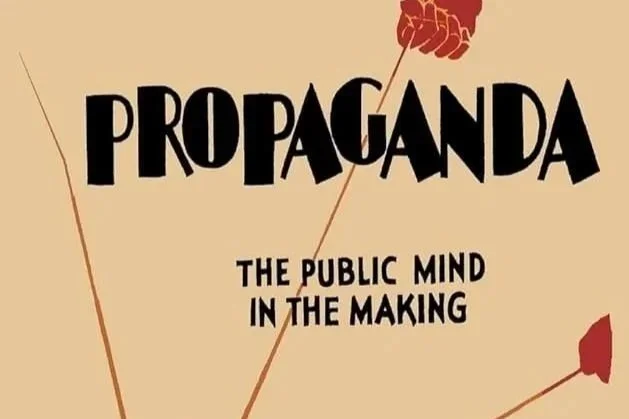
Bernays was the nephew of Sigmund Freud, and he spent his career applying his uncle's theories about unconscious motivation to the practical problems of influencing public behavior. His 1928 book, simply titled Propaganda, laid out his philosophy with remarkable candor:
"The conscious and intelligent manipulation of the organized habits and opinions of the masses is an important element in democratic society. Those who manipulate this unseen mechanism of society constitute an invisible government which is the true ruling power of our country."
Strong stuff. And while the political dimension of that quote raises legitimate alarm bells, the consumer behavior insight at its core is not controversial: people do not primarily make decisions based on rational self-interest. They make decisions based on how things make them feel, what those decisions signal about their identity, and what social norms are operating around them.
This was Bernays' great insight — and it's the foundation of modern marketing, for better and for worse.
The Psychology of Desire: What Bernays Understood That Most Small Businesses Miss
Here is the uncomfortable truth that Bernays built his career on: people rarely buy what they need. They buy what they want — and what they want is almost always connected to deeper needs: belonging, status, security, identity, love, freedom.
A man doesn't buy a pickup truck because he needs to haul things. He buys it because of how he feels when he's behind the wheel, what it says about who he is, and how it fits into the culture and community he belongs to. The functional benefits are real but secondary.
A woman doesn't buy an expensive skincare product because she's done a cost-per-ounce analysis. She buys it because of how the ritual makes her feel, the story the brand tells about who she is when she uses it, and the identity it helps her construct for herself.
This isn't cynical or manipulative as an observation. It's just honest psychology. And the small businesses that understand it — and align their marketing accordingly — consistently outperform those that don't.
Ethical Application: The Bernays Framework for Small Business
Here's where I want to make an important distinction. Understanding consumer psychology is not the same as exploiting it. Bernays often crossed that line; his work for the tobacco industry is inexcusable. But the tools he identified can be — and should be — applied with integrity.
Sell the Identity, Not Just the Product
What does it say about a person that they choose your business? Not your product's features — your business's identity. For a local hardware store, patronizing it might say: "I support my community. I value expertise. I'm the kind of person who takes care of things rather than throwing them away." That identity story is infinitely more powerful than a product feature list.
Ask yourself: what does choosing my business say about my customer? Build your marketing around that answer.
Engineer Social Proof Strategically
Bernays understood that human beings are profoundly social creatures who look to others to determine appropriate behavior. Your reviews, your testimonials, your "as seen in" mentions, your case studies — these are all forms of social proof that signal to potential customers that choosing you is the right, accepted, validated choice.
This is why we talk so often about Google reviews at Indian Lakes Marketing. It's not just about SEO. It's about social architecture — building the visible evidence that normalizes choosing your business.
Create Context That Elevates Perceived Value
Bernays understood that the same product in a different context commands a different price and different perception. A bottle of wine on a bare table in harsh lighting feels different than the same bottle on a beautifully set table with soft lighting. Neither the wine nor its quality has changed. The context has.
How are you presenting your products, services, and business? The quality of your photography, the design of your website, the feel of your physical space, the language in your communication — all of it creates context that shapes how customers perceive your value.
Tap Into Existing Values, Don't Create New Ones
The most effective marketing doesn't try to convince people of something they don't already believe. It finds what they already care about and shows them how your business connects to it. In Northeast Indiana, people deeply value community, craftsmanship, honesty, family, and faith. Good marketing here doesn't invent those values — it finds authentic ways to demonstrate how a business embodies them.
The Ethical Line
Bernays failed because he used his understanding of psychology to serve products and agendas that harmed people, without their knowledge or consent. The line I draw — and the one I'd encourage any business owner to draw — is this: use your understanding of psychology to serve your customers' genuine interests more effectively, not to manipulate them into choices that serve you at their expense.
When you understand why people really make decisions, you can communicate in ways that are genuinely resonant and honest. You don't need deception when you understand the deeper truth. And in small communities where reputation is everything and trust is the currency that matters most, honest marketing that speaks to real human desires is always the better long-term play.
Tags