Marketing Strategy
August 21, 2025
Why Lifecycle Marketing Is the Key to Small Business Growth
The Farmer's Mindset
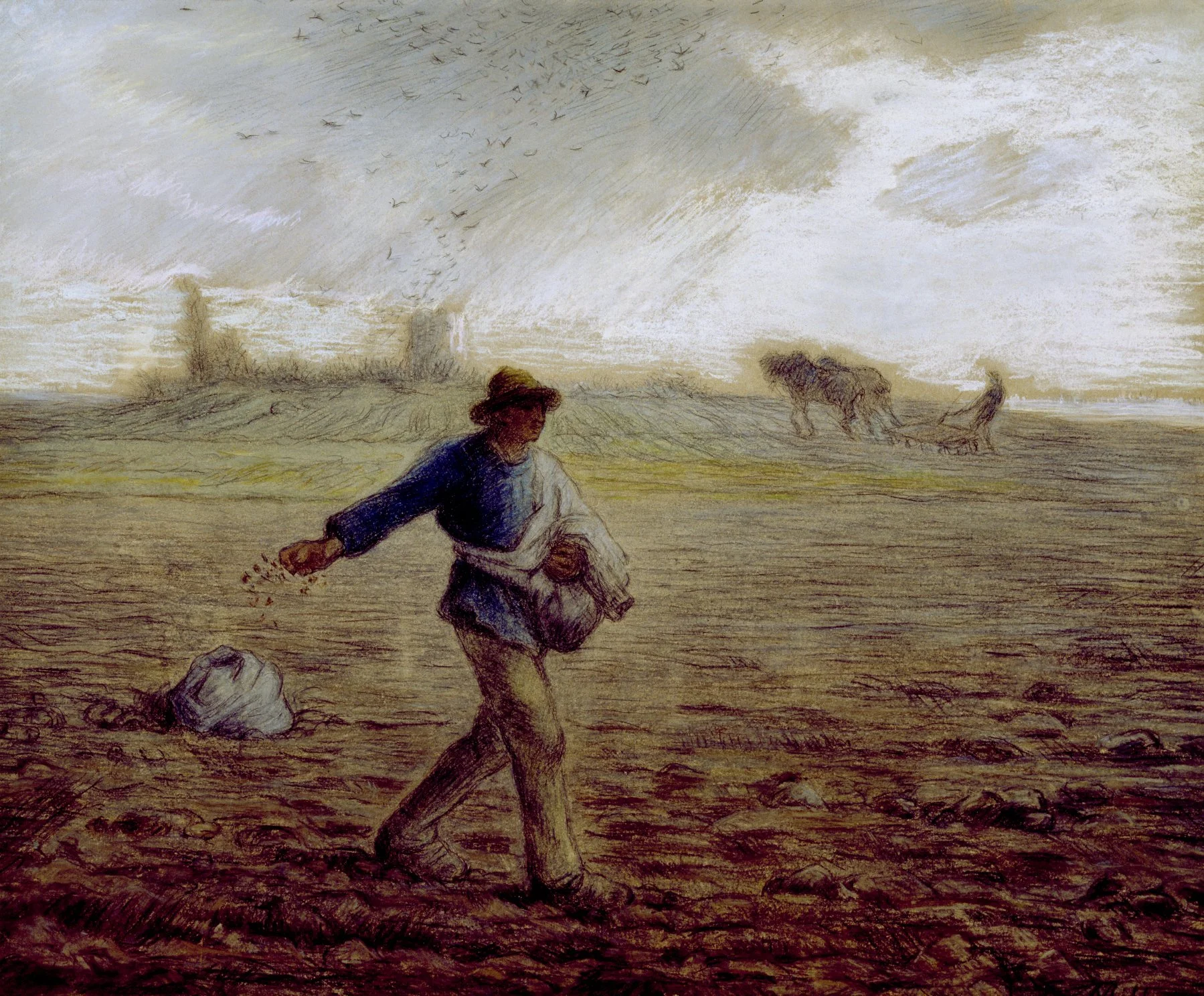
There's a parable in the Gospels about a sower who went out to scatter seed. Some fell on the path and never took root. Some fell on rocky ground and sprouted quickly but couldn't survive. Some fell among thorns and got choked out before it could bear fruit. But some fell on good soil, took root, and produced a harvest — thirty, sixty, a hundredfold.
Every small business owner I've worked with recognizes this story instinctively. You've seen leads that went nowhere. You've had customers who bought once and disappeared. You've worked your tail off to close a sale only to watch that customer drift away six months later.
Lifecycle marketing is about understanding which stage of the growth cycle you're in with every customer — and cultivating the relationship accordingly. Not every prospect is ready to buy today. Not every first-time buyer is ready to become a loyal advocate. The farmer who plants and immediately expects harvest has misunderstood the process. So has the business owner who treats every customer interaction as a transaction rather than a stage in an ongoing relationship.
What Lifecycle Marketing Actually Means
Lifecycle marketing is the practice of deliberately designing your marketing, communication, and customer experience around the stages a customer moves through — from first becoming aware of your business all the way to becoming an active advocate who refers others.
The specific stages vary by model, but the core framework looks something like this:
Stage 1: Awareness
This is the point at which a prospect first learns your business exists. Maybe they found you on Google. Maybe they drove past your location. Maybe a friend mentioned you. The goal at this stage is simple: make a strong enough first impression that they want to know more.
Awareness-stage marketing includes your local SEO, your Google Business Profile, your social media presence, and your word-of-mouth reputation. These are the channels that plant the first seed.
Stage 2: Consideration
Now the prospect is actively evaluating whether your business is the right fit for their need. They're reading your reviews. They're browsing your website. They're comparing you to alternatives. The goal at this stage is to provide enough information, social proof, and trust signals that they feel confident taking the next step.
This is where your website quality, your review strategy, your content marketing, and your testimonials do their heaviest lifting.
Stage 3: Conversion
The prospect becomes a customer. A transaction happens. Most businesses put enormous effort into getting to this stage and then treat it as the end of the journey. That's the mistake lifecycle marketing corrects.
Stage 4: Retention
Retention is where the real economics of a small business live. It costs five to seven times more to acquire a new customer than to retain an existing one, yet most small business marketing budgets are skewed almost entirely toward acquisition.
Retention marketing includes your post-purchase communication, your loyalty programs, your proactive check-ins, and the quality of ongoing service that gives customers a reason to come back. This stage is where email marketing, in particular, earns its ROI.
Stage 5: Advocacy
A retained customer who becomes an active advocate — someone who refers friends, leaves reviews, and talks about your business unprompted — is worth many times a regular repeat customer. Advocacy doesn't happen by accident. It happens when a customer's experience exceeds their expectations consistently enough that they feel compelled to tell others.
The question to ask yourself is: what does your business do, deliberately and systematically, to move customers from retention to advocacy?
Why Small Businesses Get This Wrong
Here's the pattern I see most often: a small business spends 80% of its marketing budget and attention on top-of-funnel acquisition — ads, promotions, social media posts designed to attract new people — and almost nothing on the stages that follow.
The result is a business that works extremely hard just to maintain its customer base, because it's constantly churning through customers who never develop loyalty. It's the leaky bucket problem. You can keep pouring water in, but if the bucket has holes, you never actually get full.
Lifecycle marketing patches the holes before optimizing the pour.
Mapping Your Customer Journey: A Practical Starting Point
You don't need a sophisticated CRM or a marketing automation platform to start thinking in lifecycle terms. You need a whiteboard and an honest conversation with yourself about your customer experience.
Ask these questions for each stage:
- Awareness: How do people typically find us? What's the first impression they get? Is it accurate and compelling?
- Consideration: What does a prospect look at before deciding to reach out or visit? What objections do they have? Do we address those proactively?
- Conversion: How easy is it to say yes? What friction exists in our purchase or booking process?
- Retention: What do we do in the 30, 60, and 90 days after a purchase to keep the relationship alive? Do we have any systematic process here?
- Advocacy: Do we ask for referrals? Do we make it easy for happy customers to leave reviews? Do we recognize and reward the customers who send us business?
Most small business owners find that they have decent instincts at the first two stages and almost no system at the last three. That's not a character flaw — it's just where most marketing advice focuses its attention. The opportunity, for any business willing to invest in the full journey, is enormous.
The Long Game Is the Only Game Worth Playing
In LaGrange County, where most of us know our customers by name and bump into them at the hardware store or the Dairy Dream, lifecycle marketing isn't some abstract corporate concept. It's the formalization of what the best small-town businesses have always done intuitively: treat every customer like the beginning of a long relationship, not a single transaction.
The businesses that have thrived here for generations — the ones that get talked about as institutions — have earned that status by showing up consistently for their customers at every stage of the relationship. Lifecycle marketing is just a strategic framework for doing what those businesses already know: the harvest comes from good soil, tended with care, over time.
Tags